For carriers with a record problem

When one company has more than one USDOT record

Some carriers end up with two USDOT numbers, a second application they did not mean to file, or a record that does not match the company. Here is why that happens, what it can affect, and how the record is generally straightened out.

A woman at a desk compares two file folders, with unbranded trucks visible through the window behind her.
What a duplicate looks like

Two records, one company

The public record can show the same legal name under two USDOT numbers, with authority, insurance or the address sitting on only one of them. The example below is invented, for illustration.

Example data only. These are not real companies, addresses or USDOT numbers.

Before: two records for one company

Conflicting
Record AActive
Legal name
Northview Hauling LLC
USDOT number
EX-4411
Principal address
200 Sample Parkway, Springfield, ST
Operating authority
Active
Insurance on file
Yes
Record BActive
Legal name
Northview Hauling LLC
USDOT number
EX-4488
Principal address
200 Sample Pkwy, Springfield, ST
Operating authority
None on file
Insurance on file
No

After: one record in use

Aligned
Legal name
Northview Hauling LLC
USDOT number in use
EX-4411
Principal address
200 Sample Parkway, Springfield, ST
Operating authority
Active, on EX-4411
Insurance and BOC-3
Filed against EX-4411
Record EX-4488
No longer in use (inactivated)

This graphic shows a typical pattern, not a promised result. FMCSA decides whether and when a record changes. Inspection and crash history on an inactivated number usually stays with that number.

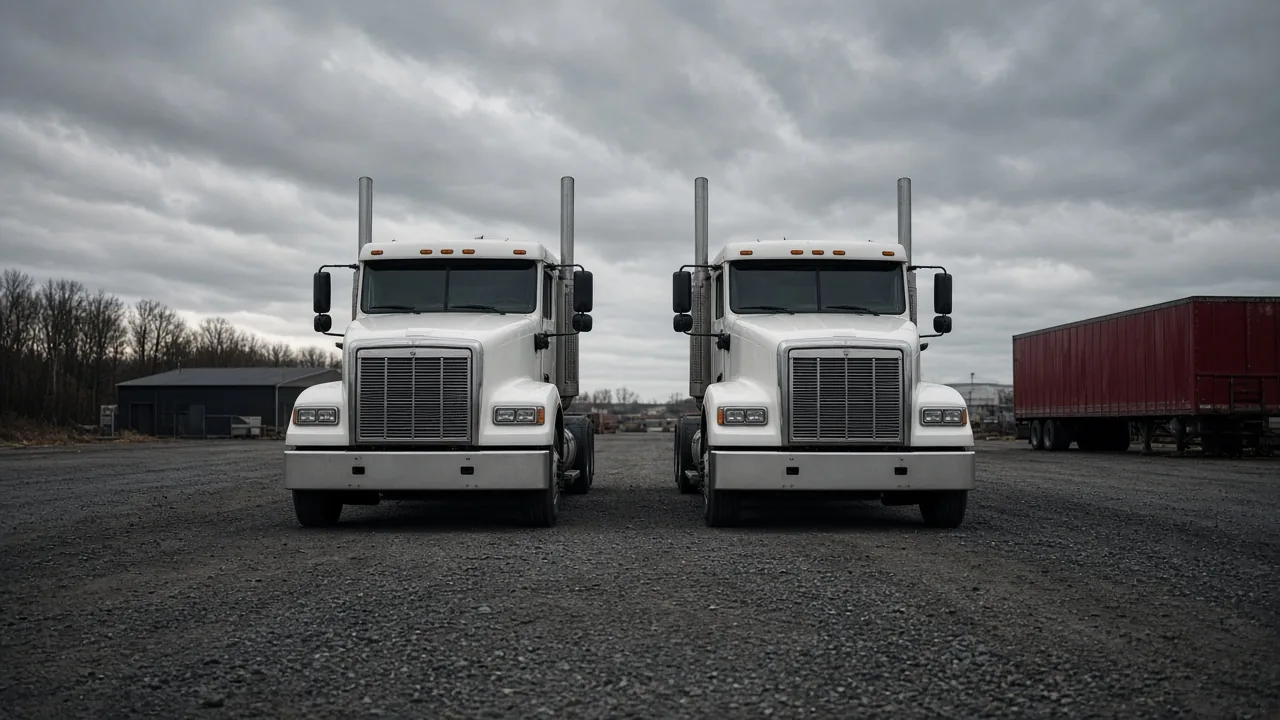
Two identical unbranded white tractor trucks parked side by side in a gravel yard, with a red trailer in the background.
Causes

A second number is often an accident, not a new company

People apply twice when a filing seems to stall. A name or address change gets submitted as a new registration. Someone cannot claim an existing record and starts over. Or two people file for the same company.

A new legal entity, such as a newly formed LLC that is a different legal person, generally needs its own USDOT number. That is a different situation, and it should be sorted out before anything is inactivated.

Read the common causes

Where it shows up

The record follows the trucks, the office and the filings

A split or conflicting record is not only a paperwork issue. It can surface in the yard, when someone looks the company up, and in the filings that are supposed to line up with one number.

Aerial view of semi-trucks and trailers parked in a marked lot.

In the yard

Vehicles are supposed to be marked with the USDOT number the company actually operates under. A second number makes it easy for markings, inspections and the record on file to drift apart.

A person wearing a headset sits at a desk and reviews a document.

At the desk

Brokers, insurers and enforcement staff often look up a single number. If two active records exist, they may be looking at an incomplete picture of the same company.

An open file box on a desk, filled with unlabeled document folders.

In the filings

Authority, insurance, a BOC-3 and UCR can sit on one number while the other number stays active with different details. That is a common source of confusion.

A messy stack of loose papers next to a neat, clipped stack of papers, with glasses and a pen.
Resolution

The usual path is to identify, keep and inactivate, then align the filings

In general, you inventory every related record, confirm whether they belong to the same legal person, keep the number that belongs to the company that is actually operating, take the extra number out of use, and point markings, insurance, BOC-3 and UCR at the number you will use.

FMCSA decides whether and when the public record changes. History on an extra number is not routinely moved onto the number you keep. This is not a guaranteed outcome or a fixed timeline.

See how resolution generally works

Filings we help with

Operating authority, BOC-3 and UCR

If a review shows that filings need to be made or moved into alignment with the number you will use, we can help prepare them. You may also file directly with the agencies.

Operating authority (MC)

Interstate operating authority is generally required for for-hire carriers of regulated property or passengers, and for brokers and freight forwarders.

  • Authority type reviewed against your operation
  • Application prepared and submitted
  • Protest period and grant tracked

A government application fee applies and is paid to the agency.

BOC-3 process agent

A BOC-3 names a process agent who can accept legal papers. It must be on file before operating authority is granted, and it should match the number you will operate under.

  • Blanket coverage arranged
  • Filed by a process-agent company, often the same business day
  • Confirmed on the record

There is no government fee; a process-agent charge applies.

UCR registration

Most interstate carriers, brokers and freight forwarders must register and pay the annual Unified Carrier Registration fee, which is based on fleet size.

  • Correct fleet-size tier
  • Filed for the right registration year
  • Tied to the USDOT number you will use

An annual government fee applies, based on fleet size.

USDOT registration and updates. There is no government fee for a USDOT number itself. If you also use another of our filing services, we include USDOT registration or an update at no added service charge. A standalone USDOT filing can be quoted when you request a review.

Record review

Send the numbers you know about

We will look at the public record, tell you what appears to be going on, and outline the filings that may be involved. We do not promise a particular agency result.

  • Possible duplicate USDOT numbers for the same company
  • Conflicting names, addresses or operation types
  • Authority, insurance, BOC-3 or UCR on the wrong number
  • Help preparing the filings that follow a review

Prefer to do this yourself? You can. Start with FMCSA registration resources and the public company snapshot, and contact FMCSA if you need the existing record linked or updated.

Request a record review

Tell us which numbers you know about and what looks wrong. We will review the public record and follow up during business hours.

We reply during business hours. Never send passwords, Login.gov codes or full Social Security numbers through this form.

If two numbers might belong to the same company, start with a review.

Request a record review